Chaldean Synod elects new Patriarch of Baghdad to succeed Cardinal Sako.
In an address to the bishops meeting for the Synod in Rome, Pope Leo said they were ‘called to elect the patriarch in a delicate and complex, and sometimes even controversial, period’.
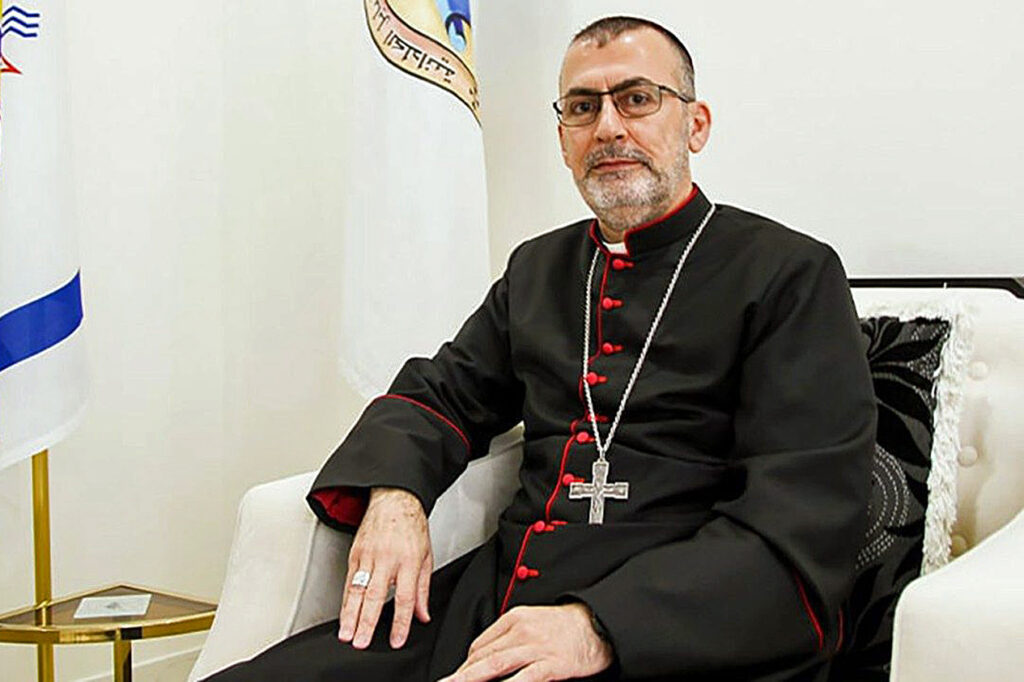
The Synod of the Chaldean Catholic Church elected Archbishop Amel Shamon Nona as the new Patriarch of Baghdad.
After meeting in Rome on 9 April the Synod elected Nona on Sunday, the second day of voting. He took the patriarchal name Paul III and will be enthroned on 15 May.
The 58-year-old previously headed the Eparchy of St Thomas the Apostle in Sydney, to which he was appointed in 2015.
His election as patriarch followed the resignation on 10 March of Cardinal Louis Raphaël I Sako, who issued a message on Sunday offering Nona “sincerest congratulations and best wishes for a reign filled with achievements, progress, and joy”.
Nona also received congratulations from Iraqi officials and politicians, the leaders of other Eastern Catholic Churches and from the heads of the other major churches in Iraq – Patriarch Awa II of the Assyrian Church of the East and Patriarch Gewargis III Younan of the Ancient Church of the East
Patriarch Paul Nona was previously Archbishop of the Chaldean Eparchy of St Thomas the Apostle in Australia.
The Archbishop of Perth Timothy Costelloe, president of the Australian Catholic Bishops’ Conference of which Nona was a member, said the new patriarch was “a shepherd formed by prayer, unwavering commitment to his people and great courage in the face of the challenges facing the Church in his homeland”.
“In a world scarred by conflict and division, the ministry of Patriarch Amel Nona will be a call to communion – within the Church, across cultures and among all who seek peace rooted in justice and faith,” Archbishop Costelloe said.
Born in Alqosh, in the Nineveh Plains of northern Iraq, Nona was ordained a priest in 1991 and in 2009 was appointed Archbishop of Mosul aged 42, after terrorists murdered his predecessor Archbishop Paulos Faraj Rahho.
In 2014, Nona joined the evacuation of Christians from Mosul during attacks by Islamic State militants, taking shelter in Erbil in northern Iraq on the invitation of Archbishop Bashar Warda. Nona and Warda were among the five bishops who refused to attend the Chaldean Synod in July 2024, accusing Cardinal Sako of canonical irregularities in his conduct as patriarch.
A biography of the new published by the Chaldean Patriarchate said he was “known for his theological depth, human closeness to his people and courage in witnessing the faith amid challenges”.
In an address to the bishops meeting for the Synod in Rome on 10 April, Pope Leo said they were “called to elect the patriarch in a delicate and complex, and sometimes even controversial, period”.
“In the light of events that have marked your Church in recent years, I feel with particular intensity the responsibility of the moment that you are living,” he said.
Pope Leo said the new patriarch should be “a man of the Beatitudes” who was “called not to extraordinary gestures and to cause uproar, but to a daily sanctity made by honesty, mercy and purity of heart”.
He continued: “I recommend that you be observant and transparent in the administration of goods, sober, measured and responsible in the use of mass media, and careful in public declarations, so that every word and deed helps to build – and not harm – ecclesial communion and the witness of the Church.”
The Pope’s address also acknowledged the contributions of Cardinal Sako “and the remarkable efforts he made” for the Chaldean Church.
The cardinal published a “farewell message” on 9 April ahead of the Synod in Rome, praying that the bishops would elect “one who embodies their unity and ensures their vitality” while affirming his decision not to attend.
“My absence from this assembly is an expression of respect for the bishops’ conscience in making their choice,” he said.
Sako’s message included a defence of his 13 years as head of the Church, arguing that they had seen a “qualitative transformation” expressing both “the beauty of tradition” and “the necessity for renewal”, referring to his efforts to reform the Chaldean liturgy.
“Tradition is not mummification, but a living spirit that continues with time in new forms. Unfortunately, this is what some people have failed to realise,” he said.
Through work with other Churches, dialogue with Islam and engagement with the state to protect the rights of Christians, the Chaldean Patriarchate “has become a religious, national, and social reference, and I really hope this will continue”, Sako said.
“I have refused to submit to blackmail, bribery or compromise and never ever bowed my head except for God in order to remain free and true to my conscience and my mission,” he said, adding a note to his message detailing his personal means and possessions alongside the financial condition of the patriarchate.
Sako offered his resignation on 9 March and asked that its acceptance be announced the next day, the same day as that of Bishop Emanuel Hana Shaleta of the Eparchy of St Peter the Apostle of San Diego who faces allegations of financial misconduct.
John Adam Fox, chairman of the charity Fellowship and Aid to the Christians of the East (FACE), commented: “The election of Paolo III Nona was an inspired choice because apart from being a gentle, kind and loving shepherd who possesses the spiritual depth and pastoral skills to lead the Chaldean Church in these troubled times, he has a broad episcopal experience not only in the biblical homelands but also in the diaspora where today, across four continents, the majority of Chaldean Christians now live.”
Patrick Hudson, Foreign Correspondent, The Tablet